

Mother Nature designed transition milk to support the calf during a highly vulnerable period after birth. Transition milk is still high in fat, natural antimicrobials, and bioactives, less concentrated than colostrum but more than conventional milk, and provides the calf with the energy, protection, and physiological signals that encourage cells to grow and differentiate, key to calf early life development. However, in most modern dairy systems, this natural phase is largely lost due to early separation of the calf from the dam and the lack of a practical way to consistently manage transition milk. As a result, an important nutritional and functional window is missing, leaving calves more susceptible and less likely to reach their genetic potential. Researchers and industry understand the value of this phase and aim to recreate it in practice by using colostrum powder to produce a low-labor intensive, consistent, and safe transition milk. In this way, producers can mimic the natural process in a standardized fashion, extending the benefits of colostrum beyond day 1 and supporting the calf during this critical window.
WHY SHOULD I FEED COLOSTRUM BEYOND DAY 1?
The biological needs of the calf that are supported by the nutrition in colostrum do not stop after the first 24 hours. During the following days after birth, the gut is still developing, immune function is still maturing, and the calf remains highly sensitive to environmental challenges. This is the period where colostrum nutrients and bioactive compounds play an important role by stimulating thermoregulation, gut development, microbial balance and overall resilience (Table 1.)
| Nutrient and bioactive compounds | Function |
| Colostral Fat | Provides immediate energy, helping calves maintain body temperature under adverse climatic conditions and supporting vital body functions. |
| Immunoglobulin G | Protects against infections and reduces the load of pathogenic microorganisms in the intestine. |
| IGF-1 and 2 | Stimulate the growth of intestinal cells, promoting the development of small intestinal villi and increasing the surface area for nutrient absorption. |
| ラクトフェリン | Acts as an antioxidant, antimicrobial, and immunomodulatory agent. It also enhances the proliferation and differentiation of intestinal epithelial cells. |
| リゾチームとラクトパーオキシダーゼ | Exhibit antimicrobial properties that help maintain a healthy intestinal microbiome, which is essential for preventing digestive diseases such as neonatal diarrhea. |
| Glucagon-like peptide-2 (GLP-2) | Stimulates intestinal cell proliferation, reduces apoptosis and inflammation in the intestinal epithelium, improves nutrient absorption, and intestinal integrity. |
| オリゴ糖 | Support early gut and microbiome development by acting as prebiotics that stimulate beneficial bacterial growth. They also reduce pathogen adhesion to the gut lining, lowering the risk of early gastrointestinal infections |
Table 1. List 0f the nutrients and bioactive compounds within colostrum that promote calf health, growth and development in the preweaning period.
The potential benefits of providing these compounds beyond day 1 have been evaluated in numerous studies using a variety of feeding strategies. These approaches include feeding maternal transition milk, feeding a few extra feedings of colostrum beyond the first 24 hours, or supplementing calves with bovine colostrum products designed to mimic transition milk. Across these studies, researchers have consistently focused on three major outcomes: gut development, calf health, and growth performance. Results have shown that feeding colostrum beyond the first day of life can enhance intestinal development and maturation (Pyo et al., 2020), reduce the risk of diarrhea and mortality while improving calf survival (Berge et al., 2009; Chamorro et al., 2017; McCarthy et al., 2024), and increase average daily gain (Van Soest et al., 2022; Kargar et al., 2020; Kargar et al., 2021). Collectively, these findings suggest that the benefits of colostrum extend beyond passive immunity and can help support calf growth, development, and performance throughout the early postnatal period.
These bioactive compounds act synergistically to support gut development, immune maturation, and overall calf health during the transition period.
| Study | Feeding Strategy | Duration | Animals | Primary Findings |
| Berge et al., 2009 | 70 g colostrum replacer mixed into milk replacer twice daily | 14 d | 90 Holstein heifer calves | Calves on PDI had fewer diarrheal days (relative risk = 0.61), reduced antimicrobial use, increased starter intake, lower mortality, and a slight improvement in growth (–0.04 kg/day greater ADG). |
| Chamorro et al., 2017 | 150 g colostrum replacer mixed into milk replacer | 14 d | 202 Holstein calves | Calves receiving colostrum supplementation had approximately 85% lower odds of diarrhea, 54% lower odds of respiratory disease, and were approximately 90% less likely to require antibiotic treatment during the preweaning period. |
| Van Soest et al., 2020 | 143 g colostrum replacer mixed into milk replacer | 3 d | 105 Holstein calves | Calves gained approximately 3 kg more body weight from birth to weaning and had lower haptoglobin concentrations, indicating reduced inflammation. |
| Pyo et al., 2020 | 1:1 colostrum replacer : milk replacer blend | 3 d | 24 Holstein bull calves | Increased intestinal development through greater villus height, crypt cell proliferation, gastrointestinal surface area, and overall small intestine maturation. |
| Carter et al., 2022 | 65 g colostrum replacer mixed into milk replacer | 14 d | 108 diarrheic Holstein heifer calves | 下痢が早く治る and greater body weight compared with calves receiving milk replacer alone. |
| McCarthy et al., 2023 | Transition milk and/or extended colostrum supplementation programs | 14 d | 200 Holstein heifer calves | Transition milk reduced diarrhea risk and mortality, while transition milk and/or extended colostrum supplementation improved average daily gain. |
| Kargar et al., 2020 | Whole colostrum supplementation | 14 d | 146 Holstein calves | Improved growth performance, with increases in average daily gain ranging from approximately 40 to 100 g/day. |
| Kargar et al., 2021 | 2 L transition milk daily | 21 d | 84 Holstein calves | Increased average daily gain by approximately 89 g/day compared with calves fed conventional milk. |
| Renaud & Steele, 2025 | Post–day 1 colostrum supplementation under field conditions | Field observations | Commercial calf operations | A greater proportion of calves remained healthy following diarrhea events, suggesting improved resilience during enteric disease challenges. |
MIMICKING TRANSITION MILK WITH A COLOSTRUM REPLACER: THE POST-DAY 1 STRATEGY
WHAT YOU NEED TO CONSIDER BEFORE ADOPTING A POST-DAY 1 STRATEGY
The basics should never be overlooked! Before implementing a post-day 1 (PD1) feeding strategy, it is essential to ensure that baseline colostrum management and calf care practices are already optimal. Transition milk should be viewed as an extension of an effective system, not a replacement for fundamental failures in early-life management.
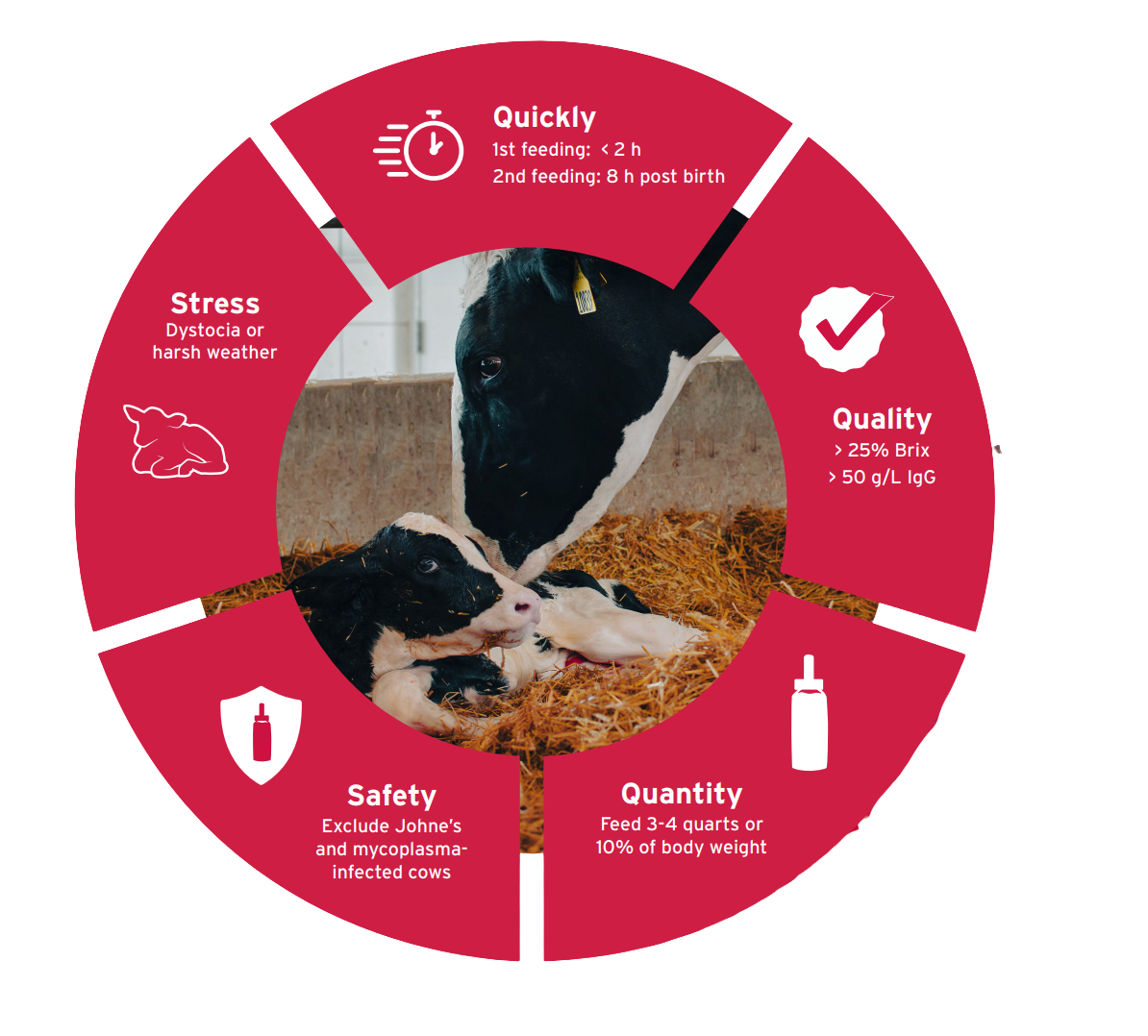
Before you get started, consider the following:
- Is your Day 1 colostrum management excellent?
Calves should consistently achieve adequate transfer of passive immunity. Without reliable passive transfer, the benefits of any PD1 nutritional strategy will be limited.
- Is your hygiene and protocol compliance high?
Calf feeding equipment, collection procedures, and housing conditions must be well controlled, with no major breakdowns in hygiene or consistency of protocols.
- Are your personnel and staff skilled and trained?
Staff responsible for calf feeding must be properly trained and, importantly, understand the biological rationale behind the strategy. Compliance improves significantly when personnel understand the “why” behind the protocol.
- Do you have a robust record-keeping system?
If not already in place, farms should develop a comprehensive recording system that includes growth rates, disease incidence, serum total protein, colostrum quality, and feeding performance. These data points are essential to evaluate the biological response and economic return on investment of the strategy.
HOW DO I START IMPLEMENTING A POST-DAY 1 STRATEGY ON-FARM?
There are three main practical approaches to incorporating colostrum powder into post–day 1 feeding systems:
1) Direct addition to whole milk
Colostrum powder is added directly to whole milk. This is the simplest operational approach, as it does not require reformulation of milk replacer or changes in mixing protocols. The main consideration is ensuring adequate mixing to achieve uniform distribution.
2) Incorporation into milk replacer
Colostrum powder is mixed into the milk replacer powder. In this case, the amount of milk replacer powder is reduced to compensate for the inclusion of colostrum powder, maintaining consistent total solids.
3) Pre-dissolution and blending strategy
Colostrum powder is first fully reconstituted in water and then added to either whole milk or milk replacer. This method can improve mixing uniformity and reduce the risk of total solids variation.
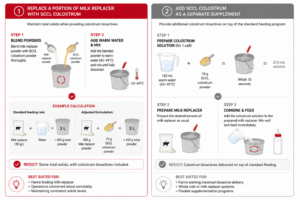
Regardless of the approach used, colostrum powder should be reconstituted using potable water at 43–49°C (110–120°F). Water temperatures below this range may result in incomplete dissolution and clumping, whereas temperatures above 60°C (140°F) can damage immunoglobulins (IgGs) and other heat-sensitive bioactive components. All mixing equipment, utensils, and feeding tools should be thoroughly cleaned and disinfected to ensure product quality and minimize bacterial contamination.
HOW MUCH AND FOR HOW LONG WILL THE POST-DAY 1 STRATEGY BE FED?
The optimal level and duration of a transition milk program will vary among farms and should be determined based on management objectives and overall health status. Factors such as day one colostrum management success, disease pressure, environmental conditions, nutrition, housing, and facility design will all influence how a PD1 colostrum program should be implemented.
In general, calves exposed to greater health or environmental challenges may benefit from longer supplementation periods and higher inclusion rates. This may include calves that experienced difficult births, delayed colostrum feeding, inadequate passive transfer, transportation stress, cold or heat stress, overcrowding, or elevated rates of diarrhea and respiratory disease. As a practical starting point, farms can tailor their transition milk program according to the level of health challenge within the herd:
| Health Challenge Level | Feeding Recommendation | Duration |
| LOW CHALLENGE (< 5% Mortality) | 70 g powder/day | 10 days |
| MODERATE CHALLENGE (5–8% Mortality) | 95 g powder/day | 12 days |
| HIGH CHALLENGE (>8% Mortality) | 120 g powder/day | 14 days |
There is no single transition milk program that fits every operation. The optimal strategy should be based on the health status of the calves, management objectives, and the challenges calves face during the first week of life.
The following farm-specific examples demonstrate how PD1 colostrum supplementation can be adapted to different management situations.
Example 1: Calf rearing operation
Calf rearing facilities often receive calves from multiple sources with little information regarding calves’ early-life management. In many cases, it is unknown whether calves received adequate colostrum, what nutritional program they were exposed to, or whether they experienced disease before arrival. In addition, beef on dairy calves are commonly exposed to stressors like transportation, feed and water restriction during transit, commingling, and adaptation to new environments.
- PROTOCOL: Upon arrival, calves may receive 120 g of colostrum powder per day incorporated into whole milk or milk replacer and divided between morning and evening feedings, for up to 14 days. The objective is to support resilience during a period of increased physiological and environmental stress.
Example 2: Dairy farm with a high incidence of early disease
Some dairies consistently achieve excellent colostrum management and successful passive transfer but continue to experience elevated rates of diarrhea during the first week of life. Factors such as hygiene, environmental conditions, nutrition, and pathogen pressure can increase the susceptibility of young calves to enteric disease during this vulnerable period.
PROTOCOL: Following successful colostrum feeding on day 1, calves may receive a PD1 1 feeding program consisting of 100 g of colostrum powder per day mixed into whole milk or milk replacer, divided between morning and evening feedings, for 7 to 10 days after birth. This strategy extends exposure to nutrients and bioactive compounds, helping support gut health, immune function, and resilience during a period of increased susceptibility to diarrhea.
In both examples, the underlying objective is the same: to provide calves with continued access to the nutrients and bioactive compounds naturally found in transition milk. These include fat to support energy balance and thermoregulation, immunoglobulins and immune peptides that help defend against pathogens, and bioactive compounds that contribute to gastrointestinal development, microbial establishment, and immune maturation during the early postnatal period.
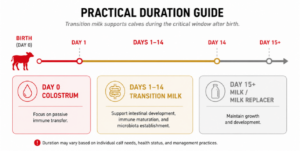
*Regardless of the selected program, calf health outcomes should be routinely monitored to evaluate the effectiveness of the feeding strategy and determine whether adjustments are needed.
HOW MUCH DOES IT COST TO IMPLEMENT A TRANSITION FEEDING PROGRAM?
When implementing a new feeding program or strategy, we would be remiss not to mention that this is an investment that is not immune to cost. While whole-bovine colostrum replacers do not come cheap, improvements in calf health, survival, and growth reported in studies evaluating transition milk and PD1 colostrum supplementation, together with the experiences of producers using these programs, suggest that the economic return is positive.
- As an example, drawn from published research, consider a 200-calf operation with a baseline preweaning mortality rate of 8%, diarrhea incidence of 60%, respiratory disease incidence of 25%, and an average daily gain of 1.32 lb/day during a 60-day preweaning period. Assuming calves receive 100 g/d of colostrum powder incorporated into whole milk or milk replacer (mimicking maternal transition milk) for 14 days, the estimated net economic benefit is approximately $20,145, corresponding to a return on investment of 2.31:1. All to say, that for every $1 investment in a post day 1 protocol could see an estimated return of $2.31 due to potential improvements in calf health, survival, and performance.
While the extent of the economic response will vary among farms, these estimates illustrate how relatively small improvements in growth, disease incidence, and calf survival can translate into substantial financial returns. Operations with higher baseline rates of disease or mortality may experience even greater benefits. Producers may also see the most benefit when combining PD1 with excellent colostrum management at birth, proper nutrition, housing, hygiene, and overall calf care practices.
WHAT TO REMEMBER WHEN IT COMES TO POST-DAY 1 COLOSTRUM FEEDING
- The biological value of colostrum extends beyond achieving passive immunity, as demonstrated in nature.
- Researchers consistently demonstrate the benefits of feeding colostrum beyond birth when calves are not raised alongside their dams.
- Post–day 1 colostrum supplementation is not a one-size-fits-all strategy; it should be customized based on each operation’s unique management challenges and goals.
- Transition milk should complement, not replace, excellent calf management.
- When integrated into a comprehensive calf program, post–day 1 colostrum supplementation has the potential to improve calf health and performance while generating a positive economic return.
Dr. Lucia Pisoni, DVM, PhD
SCCL, Veterinary Consultant