SCCL Disclaimer for Continuing Education Courses & Related Content

The Saskatoon Colostrum Company Ltd.’s (“SCCL”) Continuing Education Courses (the “Courses”), and all related informational material and content including, without limitation, SCCL’s e-newsletter and display pages (“Related Content”) which appear on www.sccl.com or any of its subdomains or are otherwise provided to users, are provided on an “AS IS” basis and are intended for general consumer understanding and education only. Any access to the Courses or Related Content is voluntary and at the sole risk of the user. SCCL makes no representations or warranties of any kind, express or implied, about the completeness, accuracy, reliability, suitability or availability with respect to the Courses or Related Content. If the user is dissatisfied with the Courses or Related Content, the user’s sole and exclusive remedy is to discontinue using the Courses and site. Nothing contained in the Courses or Related Content should be considered, or used as a substitute for, veterinary medical advice, diagnosis or treatment. The information provided on the website is for educational and informational purposes only and is not meant as a substitute for professional advice from a veterinarian or other professional. Courses and Related Content are designed to educate consumers on general colostrum benefits that may affect their animal’s daily lives. This site and its Courses do not constitute the practice of any veterinary medical or other professional veterinary health care advice, diagnosis or treatment. SCCL disclaims liability for any damages or losses, direct or indirect, that may result from use of or reliance on information contained within the Courses or Related Content. Although access to the Courses and Related Content is open to worldwide users, SCCL is organized under the laws of Canada. Therefore, the terms of this disclaimer shall be governed by the laws of Saskatchewan, Canada as to the interpretation, validity and effect of this disclaimer notwithstanding and without giving effect to any conflict of laws provisions of your domicile, residence or physical location. You agree to submit to the jurisdiction of Saskatchewan. SCCL advises consumers to always seek the advice of a veterinarian, veterinary specialist or other qualified veterinary health care provider with any questions regarding an animal’s health or medical conditions. Never disregard, avoid or delay in obtaining medical advice from your veterinarian or other qualified veterinary health care provider because of something you have read on this site.

The Colostrum Counsel

Expert advice on colostrum management and newborn best practices.

Receive our Publications!

Our bimonthly publications will inform you about colostrum management practices, newborn care, industry trends, and more.

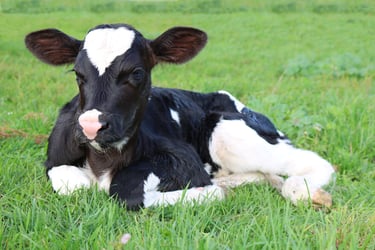
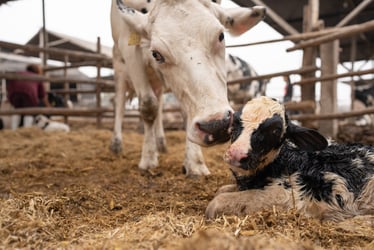
Calf laying down in pasture

The Colostrum Counsel – Dealing with Diarrhea: A 4-step Approach

November 2025
Neonatal Calf diarrhea (NCD), also known as scours, remains one of the most significant health challenges in pre-weaned calves contributing to high treatment rate, risk of death, and decreased future productivity on both dairy and beef operations. Even mild cases can have long-term impacts on growth and overall performance. While diarrhea is often seen as an unavoidable part of calf rearing, most outbreaks can be linked to management factors that can be improved with the right attention to detail.

Here are 4 steps you can take when dealing with diarrhea to improve calf outcomes:

1. Review colostrum management. Ensure the colostrum being fed has at least 50g of immunoglobulins (IgG) per liter and limit bacterial contamination through clean handling practices such as feeding as soon as possible and IgG safe pasteurization (140 °F or 60 °C for 60 min). Calves should receive colostrum within the first 6 hours after birth.

Read More
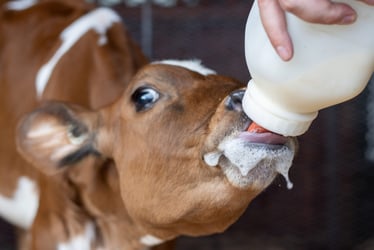
Calves in pasture

The Colostrum Counsel – The Importance of A Holistic Approach to Colostrum Management: Enrichment and Extended Feeding

November 2025
Diarrhea consistently throws a wrench into an already busy time of the year for calf managers whether said calves are black and white spotted, red, white, blue or any other variation. Preventing diarrhea before it strikes is one way to ensure animals can perform to their potential and reduce the already abundant workload during calving. A recent case study investigating a diarrhea outbreak on a UK dairy operation provided key insight on how refining colostrum management can make a major impact. When a dairy farmer noticed 100% of his calves aged 8 to 21 days were showing signs of diarrhea, they worked with their veterinarians to see what the cause could be and explore management changes to prevent future outbreaks.

Read More
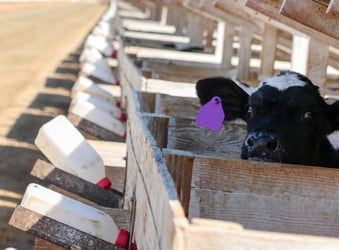
Calving season essentials check list which includes a vet contact info, calving chains and handles, disinfectant, tube feeder, sccl colostrum

The Colostrum Counsel – 7 Things To Have In Stock This Calving Season: A Veterinarian-Approved Checklist

November 2025

The first 24 hours of a calf’s life are the most critical. As we prepare for calving, taking inventory of the tools that need to be on hand should be top of mind before the first calf hits the ground. Make sure everything goes smooth this calving season by being prepared with our veterinarian-approved checklist.

Vet contact information: Add this number to your favorites list! Make sure they can be called as soon as possible if things so sideways.
Helpful tip* post the name and number of your vet on the fridge in the calving barn alongside your address or land location so anyone can acquire help during an emergency.
Post calving protocol: Talk to your vet before calving and develop a plan to deliver essential vaccines, vitamins, minerals or medications that should be given immediately post-calving or may be needed in the busy weeks to come. Be sure that any decided protocols including dosages, and medication/vitamin/vaccine names are clearly displayed for you and any staff or calving help to ensure consistent calf care.

Read More
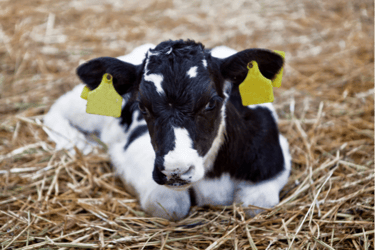
Calf laying in some straw

The Colostrum Counsel – Colostrum Beyond the First Feeding: Supporting Calves Through Diarrhea

September 2025
As the dairy industry continues to evolve under the pressure of antimicrobial resistance, producers are seeking alternatives to traditional antibiotic therapies, especially for common calfhood diseases like diarrhea. One promising solution is colostrum, not just as a preventive measure, but as an intervention during cases of diarrhea. Diarrhea remains the leading cause of morbidity and mortality in preweaned calves, often triggered by a complex interplay of environmental, management, and pathogenic factors. While prevention is paramount, ensuring adequate colostrum intake at birth, maintaining hygiene, and minimizing stress, supportive therapy is critical when diarrhea does occur.

Read More

JOIN US!

Cooling the calf: Colostrum and transition milk solutions for heat stress

-June 25th, 2025  |  5:00 pm CST

Online zoom webinar