SCCL Disclaimer for Continuing Education Courses & Related Content

The Saskatoon Colostrum Company Ltd.’s (“SCCL”) Continuing Education Courses (the “Courses”), and all related informational material and content including, without limitation, SCCL’s e-newsletter and display pages (“Related Content”) which appear on www.devsccl.wpengine.com or any of its subdomains or are otherwise provided to users, are provided on an “AS IS” basis and are intended for general consumer understanding and education only. Any access to the Courses or Related Content is voluntary and at the sole risk of the user. SCCL makes no representations or warranties of any kind, express or implied, about the completeness, accuracy, reliability, suitability or availability with respect to the Courses or Related Content. If the user is dissatisfied with the Courses or Related Content, the user’s sole and exclusive remedy is to discontinue using the Courses and site. Nothing contained in the Courses or Related Content should be considered, or used as a substitute for, veterinary medical advice, diagnosis or treatment. The information provided on the website is for educational and informational purposes only and is not meant as a substitute for professional advice from a veterinarian or other professional. Courses and Related Content are designed to educate consumers on general colostrum benefits that may affect their animal’s daily lives. This site and its Courses do not constitute the practice of any veterinary medical or other professional veterinary health care advice, diagnosis or treatment. SCCL disclaims liability for any damages or losses, direct or indirect, that may result from use of or reliance on information contained within the Courses or Related Content. Although access to the Courses and Related Content is open to worldwide users, SCCL is organized under the laws of Canada. Therefore, the terms of this disclaimer shall be governed by the laws of Saskatchewan, Canada as to the interpretation, validity and effect of this disclaimer notwithstanding and without giving effect to any conflict of laws provisions of your domicile, residence or physical location. You agree to submit to the jurisdiction of Saskatchewan. SCCL advises consumers to always seek the advice of a veterinarian, veterinary specialist or other qualified veterinary health care provider with any questions regarding an animal’s health or medical conditions. Never disregard, avoid or delay in obtaining medical advice from your veterinarian or other qualified veterinary health care provider because of something you have read on this site.

Learning
Center

We’ve created a variety of tools to help you learn more about colostrum, calves and SCCL. Our goal is to equip you with the the best resources to feel confident when feeding colostrum and making decisions in raising your calves.

The Colostrum Counsel

The publication delivering expert advice for colostrum management practices.

Is Day One Colostrum Management the Key to Improving Beef on Dairy Health at the Feedlot?

Preweaning Health Is a Lifetime Profitability Issue

Not all Colostrum is Created Equal: Why Fat Matters More Than You Think for Calves

The Colostrum Counsel – More than an Antibody Bolus: The Benefits of Colostrum Beyond IgGs

The Colostrum Counsel – Maternal Colostrum Quality Varies, Calf Health Shouldn’t

The Colostrum Counsel – Maximizing the Most Important Meal in the Life of a Cow

The Colostrum Counsel – Dealing with Diarrhea: A 4-step Approach

The Colostrum Counsel – The Importance of A Holistic Approach to Colostrum Management: Enrichment and Extended Feeding

Collaborative Studies

Collaborative published studies proving the efficacy and safety of products manufactured by SCCL and the applications for feeding colostrum in calves.

Effects of enriching IgG concentration in low- and medium-quality colostrum with colostrum replacer on IgG absorption in newborn Holstein calves

A.J. Lopez, J.Echeverry-Munera, H.McCarthy, A.C. Welboren, A.Pineda, M.Nagorske, D.L.Renaud, M.A.Steele

J Dairy Sci. 2023 May; 106(8):3680-3691

Feeding colostrum or a 1:1 colostrum:milk mixture for 3 days postnatal increases small intestinal development and minimally influences plasma glucagon-like peptide-2 and serum insulin-like growth factor-1 concentrations in Holstein bull calves Describes how gut development is influenced by PD1; Persistency of IgG in serum also described;

Pyo J, Hare K, Pletts S, Inabu Y, Haines D, Sugino T, Guan LL, Steele M.

J Dairy Sci. 2020 May;103(5):4236-4251. doi: 10.3168/jds.2019-17219. Epub 2020 Mar 12. PMID: 32171512.

Timing of colostrum and impacts on gut microflora

Ma T, O’Hara E, Song Y, Fischer AJ, He Z, Steele MA, Guan LL.

J Dairy Sci. 2019 Aug;102(8):7073-7086. doi: 10.3168/jds.2018-16130. Epub 2019 Jun 13. PMID: 31202657.

Mixing and Feeding Tips

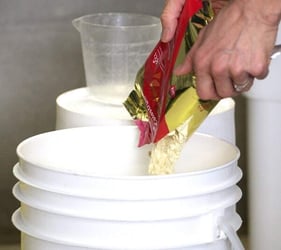
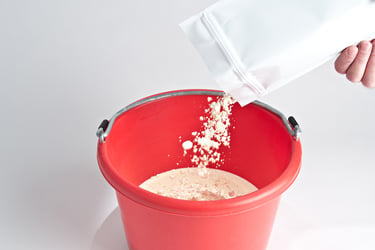
SCCL’s colostrum products are a easy and convenient solution to get your newborns off to a strong, healthy start. Check out these simple tips to easily mix and feed our products.

Frequently Asked Questions

  • Herd colostrum may be unsafe because of the presence of infectious diseases such as Johnes, BVD, BLV, Salmonella, and others.
  • Quantity or quality of available colostrum may be highly variable.
  • Not enough labour to properly collect, test, store, and feed herd colostrum.
  • In high value or high-risk calves with circumstances such as dystocia or cold temperature, calves need extra, good quality colostrum fast that’s high in immunoglobulins and natural colostral fat.
  • To assure every calf receives their first feed as soon as possible after birth to cover energy and immunity needs.

Colostrum products should be made from actual whole bovine colostrum. Many products on the market are a combination of many ingredients that attempt to mimic maternal colostrum. There should be a single ingredient on the label: bovine colostrum. The product should also contain true colostral fat. Fats and oils from other sources do not provide the same benefits to the calf. In one study, calves fed defatted colostrum replacer had a 50% increase in respiratory disease in the first 90 days of life and a 6% increase in mortality. They also had lower rectal temperatures and spent less time standing and more time in a lying position.

Yes, there can be benefits from feeding smaller amounts of colostrum after day one. Colostrum can be fed after the first day of life to improve gastrointestinal health to create a healthier, more productive calf. Naturally, cows continue producing smaller amounts of colostrum after a calf is born, so this application mimics that transition milk by adding colostrum powder to the calf’s whole milk or milk replacer diet for the first two weeks of life. In situations where diarrhea is a problem, the immunoglobulins will provide local immunity in the intestines to restore gut health.

  • First calf heifers
  • Heat stress, cold stress
  • Poor teat or udder confirmation
  • Leaked colostrum from the udder before calving
  • Produces a very small volume of colostrum
  • Nervous, poor mothering instinct, or rejects calf
  • Slow recovery from calving, or ill
  • Genetic differences in colostrum quality
  • Poor nutrition

  • After collecting and testing your own colostrum with a Brix refractometer or hydrometer, colostrum that is not going to be used for immediate feeding can be stored in two different ways; cooled in the refrigerator or frozen in a freezer.
  • If the colostrum is going to be fed later in the day or within 24 hours, it can be refrigerated between 1 to 1.5°C (33 to 35°F).
  • If the colostrum is not going to be used before 24 hours, it can be frozen within the first hour of collection at -20 to -21°C (-5°F). This colostrum could be used safely for about 6 months, and some would argue that it can be used for up to a year.
  • It is important to remember that repeated freeze thaw cycles dramatically damage and affect the functional antibodies in colostrum and therefore life span of the frozen colostrum is reduced.

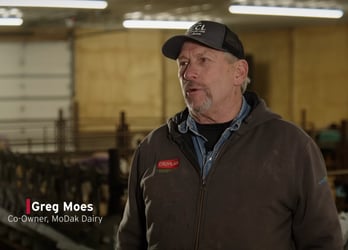
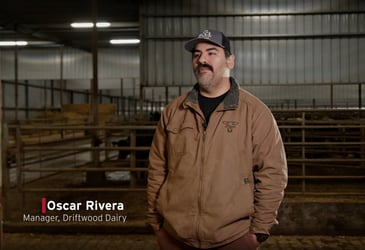
Meet Headstart Dairy

They understand that a successful dairy herd starts with healthy calves. Learn more about how SCCL has helped them achieve their herd’s goals through colostrum.

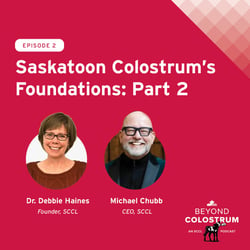
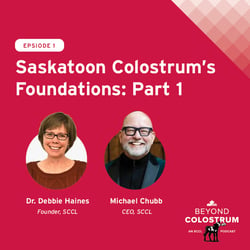
Beyond Colostrum Podcasts

It’s more important than ever to dial in your newborn calf management and find solutions to advance your operation.
Welcome to the Beyond Colostrum podcast, where we discuss research-proven ways to improve your newborn calf health, while optimizing performance and maximizing your genetic potential and profitability.
Now Let’s go Beyond Colostrum!

Listen on

Highlighted Episodes

Beyond Colostrum: Managing Heat Stress

Beyond Colostrum: Preventing the need for antibiotics in calves

Beyond Colostrum: The Value of Colostrum for Beef Calves

Beyond Colostrum: Beef Producers Commonly Asked Questions

Where to Buy

We offer our products in many countries across North America, South America, Europe and Asia.

JOIN US!

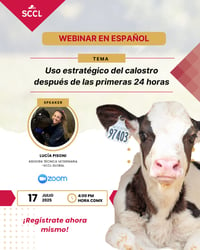
Cooling the calf: Colostrum and transition milk solutions for heat stress

-June 25th, 2025  |  5:00 pm CST

Online zoom webinar